
Scioto Parole and Probation
Physical release does not always end legal control. In Ohio, parole is conditional release for a person whose sentence falls under a parole-eligible structure. Post-release control is supervision imposed after some prison terms. Both are handled through the Ohio Adult Parole Authority, commonly called APA. Probation, often shown in Ohio court records as community control, comes from a court and may follow a jail term, a STAR residential placement, or a non-prison sentence.
The source must match the form of supervision. An ODRC result marked APA SUPERVISION is evidence that the person is outside prison while still under state control. A Portsmouth Municipal Court probation result concerns that court's case. A Scioto Common Pleas docket may show felony community-control terms. None of those records, alone, states the exact time someone walked out of Scioto County Jail.
| Supervision | Who orders it | Public check | How it ends |
|---|---|---|---|
| Parole | Ohio Parole Board under an eligible sentence | ODRC Offender Search and Board record | APA discharge or sentence completion |
| Post-release control | Ohio law and the sentencing judgment | ODRC APA status and court docket | End or early termination of the supervision period |
| Probation or community control | Portsmouth Municipal Court or Scioto Common Pleas | Municipal Probation Search or the correct court docket | Court termination, completion, or discharge entry |
- Parole
- Conditional release from prison before the controlling sentence fully expires.
- Probation
- Court-ordered supervision in the community, often called community control in Ohio.
- Post-release control
- APA supervision that follows a qualifying prison sentence.
- Discharge
- The formal end of custody or supervision, not merely release from a building.
Check Scioto Post-Release Supervision
Begin with identity, not a status label. Use the full name, date of birth, ODRC number if known, and the court case number. A same-name result may concern another person or an earlier offense. ODRC also warns that a supervision period may relate to a prior offense, so compare committing county, docket, conviction, and dates before drawing a conclusion.
- Open the ODRC Offender Search. Search by name or ODRC number and choose APA Supervision or All.
- Open the matching detail. Read status, supervision start, supervision period, APA office, committing county, and case details.
- For a municipal case, use Portsmouth Municipal Court CaseLook and its Probation Search.
- For a felony case, check the Scioto Common Pleas record portal for judgment and community-control entries.
- If a field conflicts with the judgment, save the exact result and ask the named agency about that record. Do not treat a roster absence as supervision proof.
The county jail roster serves another job. It lists current jail custody. Once a person leaves the jail, the sheriff release record can prove the exit, but state and court records determine whether supervision remains. The full county release path is set out on the Scioto County released inmates search.
The official ODRC search form shows separate filters for Released, APA Supervision, and Violators at Large.
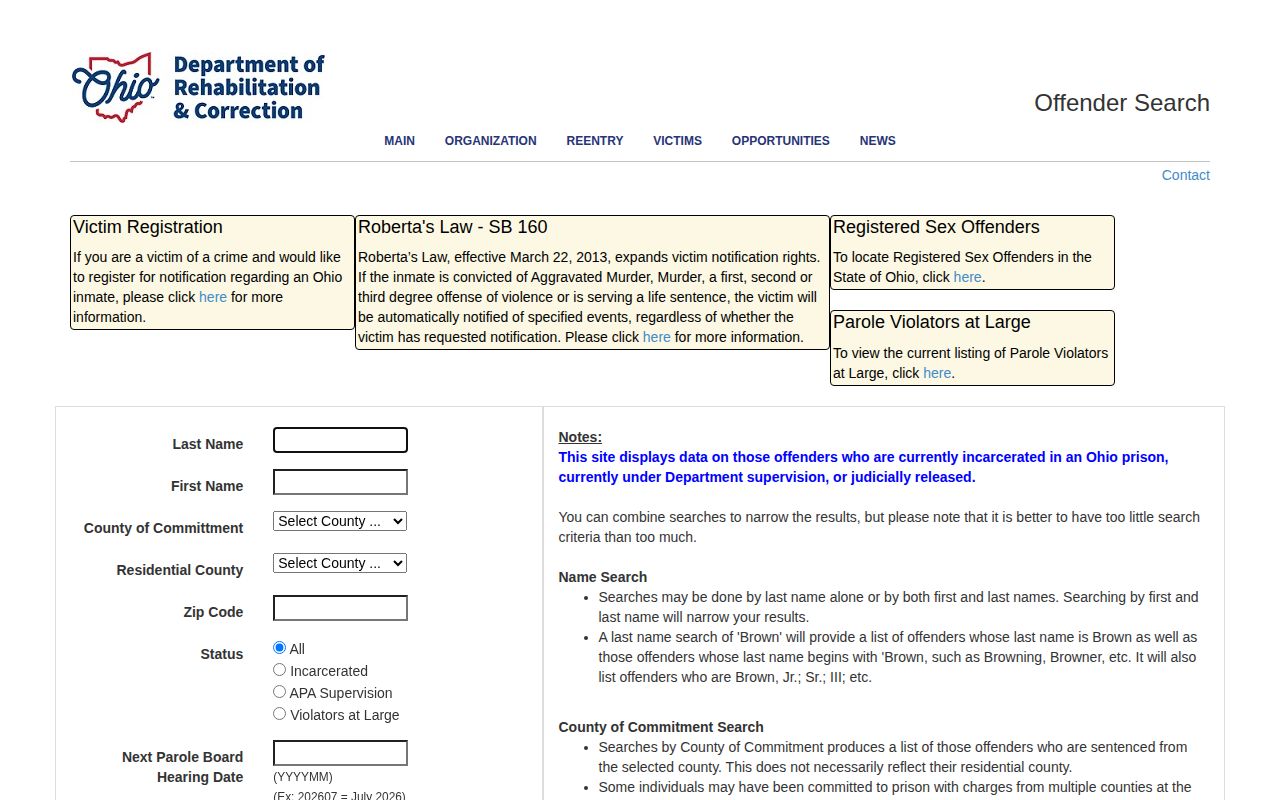
Those choices help keep release from prison, active state supervision, and an alleged supervision violation from being merged into one status.
Note: Residential county and ZIP in an APA result are last recorded fields, not a verified present address.
Scioto APA Supervision Records
The public Scioto-linked ODRC example names SCIOTO 2 as its APA office. Research did not locate a current official ODRC directory page that verifies a street address or direct telephone number for that unit. That gap matters. An unofficial directory should not be used to fill official contact details.
Use the supervising-unit label shown on the person's live profile. Sentence and release-field questions can go to ODRC Central Records after the profile is saved. General parole matters can be directed to the Ohio Parole Board with the person's name and ODRC number. The Board's official handbook supplies the contact data below.
Ohio Department of Rehabilitation and Correction
4545 Fisher Road, Suite D
Columbus, OH 43228
614-728-1976 or 888-842-8464
The official SCIOTO 2 APA example shows how the office label, supervision start, and supervision period appear together.
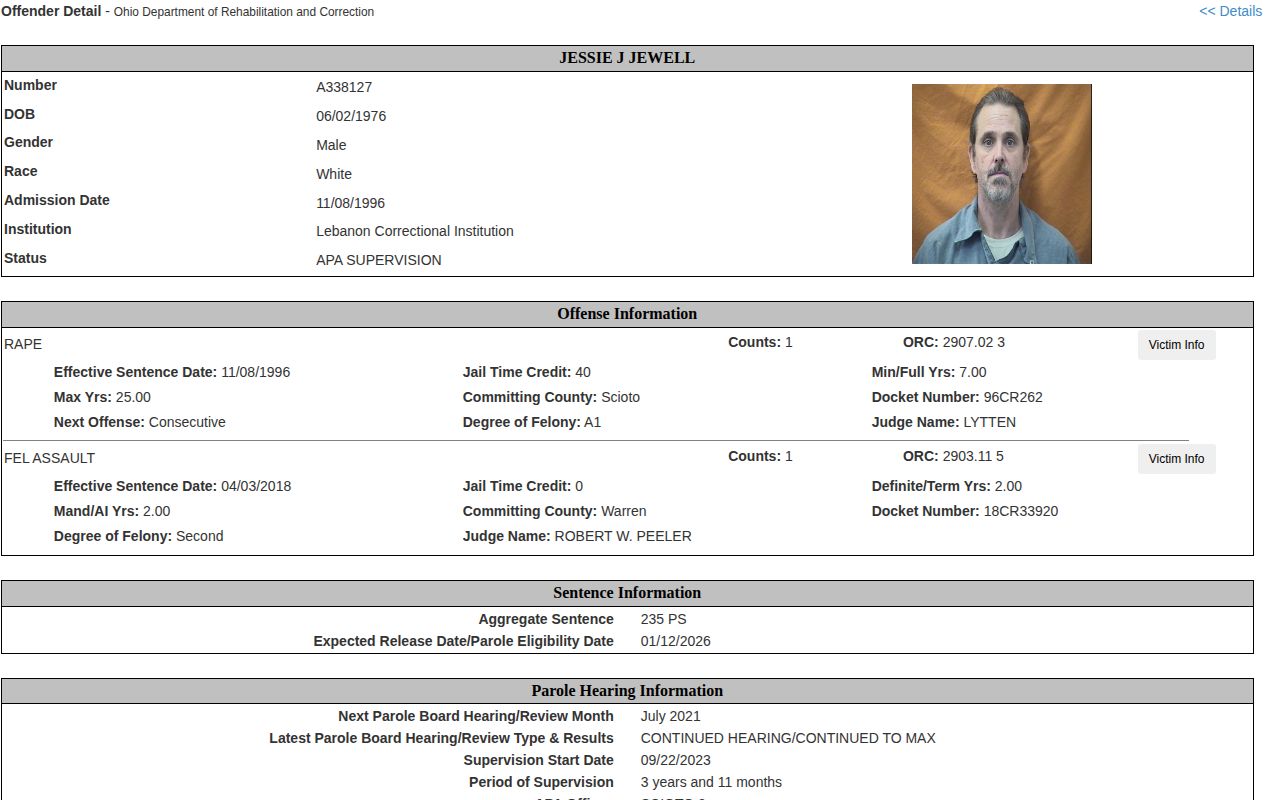
The image is a field example, not a directory and not proof that every Scioto County case is assigned to the same unit.
Scioto Probation Court Paths
Local probation is split by court. Portsmouth Municipal Court handles misdemeanors and the early stages of felony matters. Scioto Common Pleas handles felony judgments and related community control. A case can begin in Municipal Court and later appear in Common Pleas, so one blank search does not always close the inquiry.
STAR Community Justice Center adds another local layer. STAR is a community-based correctional facility, not the county jail and not an ODRC prison. A person may finish residence at STAR while probation or other court duties continue. Verify a STAR exit with the center, then read the committing court's docket and the probation record.
Portsmouth Municipal CaseLook presents record, warrant, calendar, and probation tools from one official landing page.
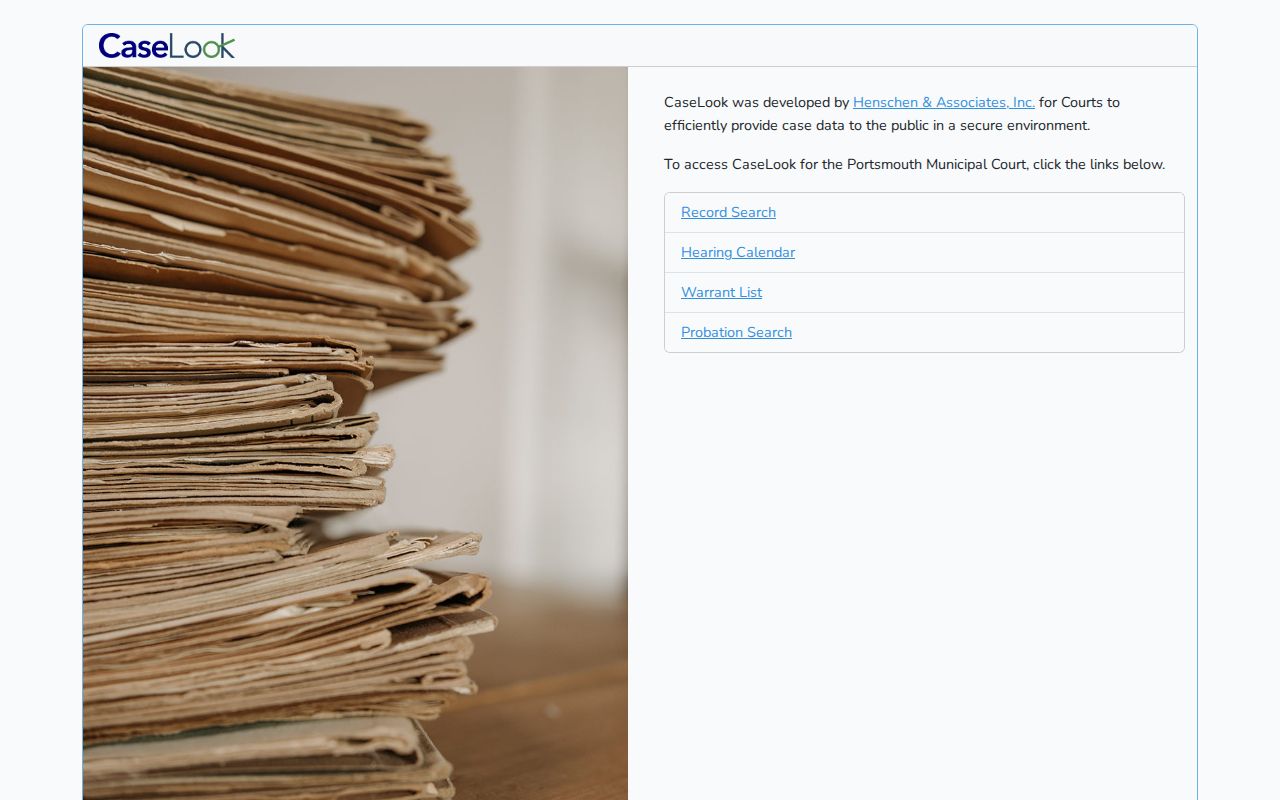
That layout makes it useful for local probation, but the Common Pleas portal remains necessary for a final felony disposition.
Scioto Supervision Warrants Explained
Portsmouth Municipal CaseLook publishes distinct Warrant List and Probation Search tools. This Scioto-specific split is useful when a person is no longer on the jail roster but a local court issue may remain. A warrant result does not reveal the date or reason for the prior jail release. A probation result does not establish state APA supervision.
ODRC maintains a separate Violators at Large list for people it says absconded from APA supervision. An absconder is a supervised person alleged to have stopped reporting or otherwise left supervision without authorization. The displayed address is the last one recorded before at-large status, not a confirmed current location. The public should not attempt apprehension. Law enforcement must verify a warrant through its own systems.
The official ODRC Violators at Large page includes those limits with the listings.
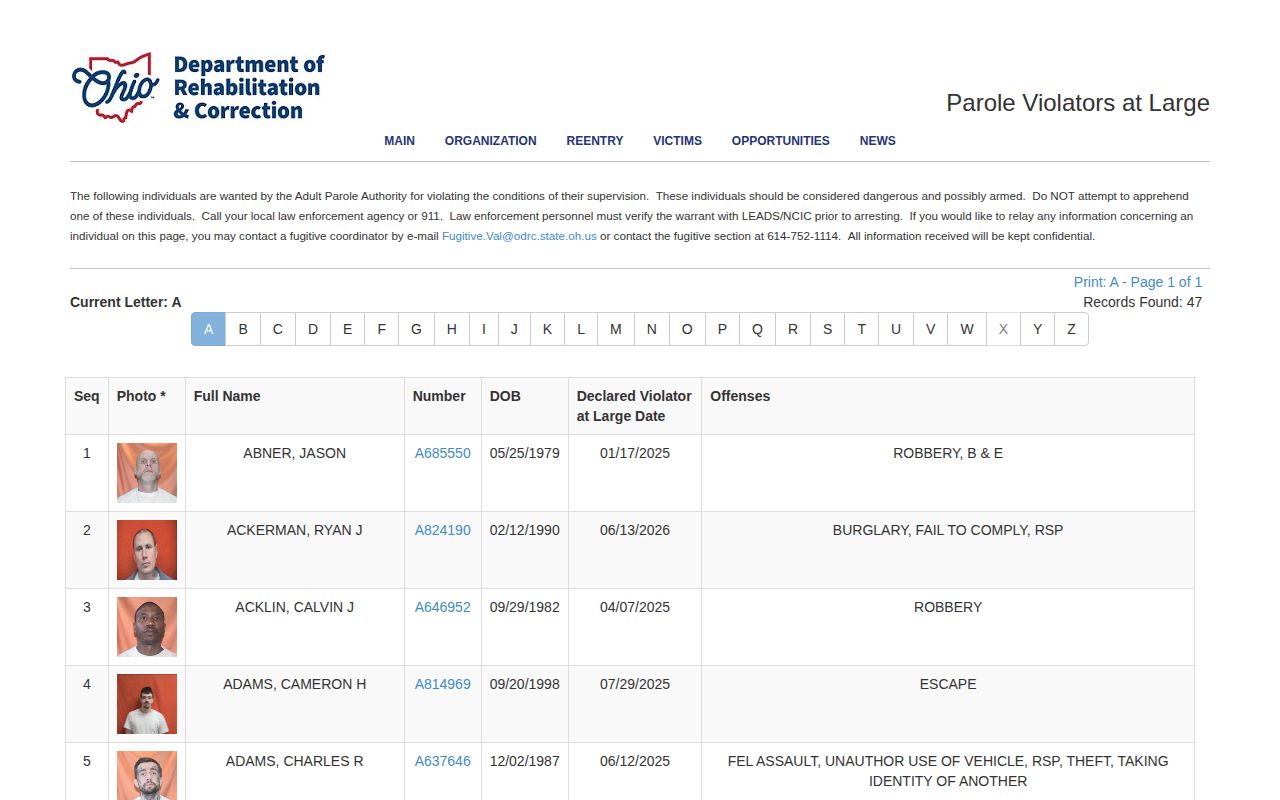
Use it to verify the stated APA category, not to infer present whereabouts or a new Scioto County jail event.
Note: A supervision violation may lead to court or APA action, but a public listing is not an arrest confirmation.
Scioto Release Supervision Conditions
Conditions are the rules imposed while supervision lasts. ODRC publishes statewide Conditions of Supervision. They address reporting, lawful conduct, permission for certain moves or travel, and compliance with instructions. A court's probation order can add case-specific terms. The public status record rarely contains the whole working supervision file.
Ohio public-record law draws a firm line here. ORC 149.43 excludes records pertaining to probation, parole, community control, post-release control, and some release proceedings from the general public-record definition. Public status fields, docket entries, and some parole orders can still be available through their specific authority. That does not make the full APA or probation file open.
Public parole determinations follow their own rule. Ohio Administrative Code 5120:1-1-36 makes Board determinations, orders, and minutes public within its limits, while some decision sheets and underlying material remain controlled or redacted. A person seeking documentary proof should use the ODRC detail first, then request the specific Board order or minutes when the event requires more than a status screen. This route is narrower and more reliable than asking for an entire supervision file.
For a precise question, ask for the existing public record that answers it. A court termination entry may show that probation ended. An ODRC status change can show the end of APA control. Broad requests for all supervision notes are likely to reach protected material.
Scioto Post-Release Reentry Contacts
Scioto County has a regional reentry contact named in ODRC's current directory. The Southeast Ohio Reentry Coalition covers Scioto, Adams, Brown, Jackson, Lawrence, and Pike counties. It is a navigation and coordination resource for post-release needs. It is not the office that decides parole, reports a jail release, or changes a court order.
The directory lists SEORC.reentry@gmail.com, coordinator Maxine Malone at 740-727-4801, and president Brandi Hawthorne at 740-656-3324. STAR Community Justice Center in Franklin Furnace is another useful local system contact when a residential community-corrections placement is part of the case. Contacting either resource does not replace checking the supervising agency.
Covers Scioto and five nearby counties
SEORC.reentry@gmail.com
Coordinator: 740-727-4801
President: 740-656-3324
The distinction is practical. Reentry contacts can help a released person coordinate next steps. Only the court, APA, or another supervising authority can confirm legal status and discharge.
Note: A reentry contact can aid coordination, but it cannot alter an APA condition or a court's supervision order.
Confirm Scioto Supervision Discharge
Release from a jail or prison and discharge from supervision are separate events. A person may have a prison release detail and an active APA record at the same time. Likewise, finishing residence at STAR can leave community-control duties in place. Final discharge means the controlling authority has ended that part of the case.
For state supervision, read the ODRC status and any supervision end date or early-termination field. For municipal probation, look for a termination or completion entry in CaseLook. For felony community control, use the Common Pleas docket and obtain the court entry when the online summary is unclear. The Common Pleas Clerk warns that posting can lag judicial action, sometimes by much more than a day.
VINE may send notice of release from parole in an ODRC case, but Ohio's own warning says not to rely on VINE alone. Preserve that event wording and compare it with the current ODRC status. In a local probation case, the controlling evidence remains the court entry rather than a state custody alert. This final check keeps the agency, case, and form of supervision aligned.
When timing is important, compare the live status with the signed court or agency record. This prevents an old release date, a new warrant, and a later discharge from being treated as one event.